

GC IV Commentary Series – Article 47 of the Fourth Geneva Convention of 1949: A Possible Blind Spot
Editors’ note: The following series considers ICRC’s 2025 updated Commentary on the Fourth Geneva Convention. Rosa-Lena Lauterbach, Liisi Adamson, and Sean Watts’s introduction to the series is available here.
Although the International Committee of the Red Cross (ICRC) updated Commentary offers thorough treatment, the aim of this post is to cast additional light on two sides of the coin that is Article 47 of the 1949 Fourth Geneva Convention (GC IV). First, we will explore the true scope and content of the provision to give it proper interpretation.
Second, we will consider whether there are some situations for which the regulation of Article 47 is not fully adapted, namely, situations which lead to a normative blind spot. This may be the case especially in prolonged occupations, where agreements must to some extent adapt the situation to new realities. The aim of these agreements must not be to deprive civilians of their rights, although exactly that may incidentally occur to some extent. Would then Article 47 entail a responsibility of the parties to the agreement, or even cause it to become void? This question is explored here to supplement the coverage offered by the updated Commentary.
Understanding Article 47
Article 47 of GC IV reads as follows.
Protected persons who are in occupied territory shall not be deprived, in any case or in any manner whatsoever, of the benefits of the present Convention by any change introduced, as the result of the occupation of a territory, into the institutions or government of the said territory, nor by any agreement concluded between the authorities of the occupied territories and the Occupying Power, nor by any annexation by the latter of the whole or part of the occupied territory.
The article aims to maintain the legal effectiveness of the rights and especially the obligations incumbent upon an occupying power (i.e. the rights of the civilians in occupied territory). An occupant may well be tempted by an all-too-easy pretext to evade its duties as occupier if it could, for example, annex the territory and pretend that, being now on its own national territory, it would not owe obligations under the law of occupation. The aim of Article 47 is thus to close the way to such circumventing action and to forestall a glaring and threatening gap in the law of occupation.
In this regard, Article 47 is fundamental. In the words of the recent updated ICRC GC IV Commentary,
Its placement underscores the importance of this rule, establishing as it does the inviolability of the benefits guaranteed by the Convention to protected persons in occupied territory and ensuring that they are not deprived of those benefits in any way. It is a key safeguard in relation to all the other provisions in the Convention that are applicable during occupation (para. 3097).
Despite its fundamental character, it must be recalled that Article 47 is a mere jus in bello provision without any jus ad bellum component. In this sense, Article 47 does not prohibit annexation of territory. The prohibition of annexation is contained in the jus ad bellum and is attached to Article 2(4) of the UN Charter. Instead, the point of Article 47 is merely to state that even if the described action takes place (e.g. an annexation occurs) protected persons cannot be stripped of their rights and the occupying power concomitantly does not free itself of its corresponding obligations.
As to the status of any contrary agreements by the parties, to the extent that they do not contravene IHL positions expressing jus cogens (a matter that requires a separate analysis, which cannot be pursued here), these agreements are neither void nor voidable as such. There is indeed no such ground of voidness recognized in international law under the Vienna Convention on the Law of Treaties (VCLT, art. 42(1)) nor in the law of armed conflict, for which the VCLT enters a caveat (art. 73).
This means that any derogatory agreement between the occupant and another power is valid, but its implementation will breach GC IV. The indelicate occupant will therefore face responsibility, including countermeasures. The strength of Article 47 is not maximal because it does not produce a ground of invalidity and therefore voidness. This aligns with the general system of international law; voidness is indeed the exception in international law. The general rule applicable is the concomitant validity of contradictory legal acts, with the follow-up by the rules of international responsibility for breach of obligations.
Finally, it must be emphasized that Article 47 is to be read in conjunction with GC IV Articles 7 (addressing special agreements) and 8 (addressing non-renunciation of rights), all these provisions treating the point of “non-derogation” of the rights of protected persons. Article 47 is manifestly a product of the experiences of the Second World War. Entire civilian populations were excluded from the application of occupation law and placed at the mercy of the occupier’s discretion. Several means were used to achieve this, such as preemptive annexation (e.g. in Poland), agreements between the occupier and pressured local authorities (e.g. in Norway or France), or the installation of new institutions, particularly puppet governments (e.g. in Croatia). Through these subterfuges, the occupier could evade the application of occupation law.
Three Limbs
An analysis of the three limbs of Article 47 (which are not exhaustive: see the phrase “in any case or in any manner whatsoever”) yields the following results.
(1) Article 47 prohibits evading rights by changes to the institutions or government of the occupied territory. Examples include changes to the form of government, the creation of new military or political bodies, the transformation of constitutional institutions, the dissolution of a State, the formation of new political entities, and so on. However, Article 47 does not in any way prohibit the occupying power from making changes that amount to the abolition of oppressive institutions (such as the Gestapo) or laws (such as the Nuremberg Laws). The aim in such cases is not to deprive civilians of their rights under the Convention, but rather to restore those rights to them.
(2) It prohibits (derogatory) agreements between the authorities of the occupied territory and the Occupying Power. Such agreements are already prohibited by GC IV, Article 7. That article reiterates this prohibition in matters of occupation, as the danger of such derogatory agreements is particularly great. The same applies to unilateral “waivers” that would, for example, tolerate deportations or forced conscription. The clause applies to the legitimate authorities of the occupied territory as well as to authorities installed and maintained by the occupier. In the words of the new ICRC Commentary,
The purpose of this prohibition is to prevent local authorities—who may be subject to pressure or coercion from the Occupying Power—from making concessions to the detriment of the occupied population. For instance, Article 47 would prohibit local authorities from agreeing to ban the activities of humanitarian organizations in the occupied territory, to tolerate the deportation of protected persons by the occupying forces, or to relieve the Occupying Power of its obligation to ensure sufficient food and medical supplies for the population under occupation (para. 3118).
(3) Occupation is a temporary de facto possession that does not include the right of annexation. During hostilities, no annexation is lawful; the matter must be settled by peace treaty or other agreements, respecting the principle of self-determination of peoples. Anticipated and illegal annexations cannot waive the application of the GC IV guarantees. The new ICRC Commentary even claims that annexation goes indirectly against the law of occupation.
Although international humanitarian law does not expressly prohibit the forcible acquisition of territory, any such annexation during an ongoing occupation would inescapably lead to violations of that law. For example, the annexed territory would, by definition, be subject to the legislation of the annexing State, which would exceed the limited scope of the Occupying Power’s legislative competences in the occupied territory. More broadly, unilateral annexation would entail the exercise of sovereignty over the occupied territory and purport to create a permanent situation that would eliminate the status quo ante. In the ICRC’s view, both of those consequences are inconsistent with the law of occupation’s underlying principles, namely that the Occupying Power does not acquire any sovereignty over the occupied territory and that it must maintain the status quo ante (para. 3127).
Article 47 cannot, however, address the preliminary question of whether GC IV is applicable at all. As practice in recent decades has shown, this is where the crucial problem arises. Not many occupying powers have recognized the formal applicability of GC IV. Examples include Israel / Palestine, Western Sahara, Namibia, Afghanistan (1979), East Timor, Kampuchea, Cyprus, Kuwait (1990), and others. If the Convention is not considered to be applicable, the question of the mandatory guarantees of Article 47 is, in principle, no longer relevant. Perhaps Article 47 can be interpreted to extend to such preliminary applicability questions through the saving clause “in any case or in any manner whatsoever,” but that is problematic and uncertain.
An Article 47 Blind Spot
As far as the general aim of the provision goes, its regulation is firm and holds. However, at least hypothetically, situations could arise which seem to conflict with the requirements of Article 47 and deserve closer consideration than the updated Commentary provides. That is the case mainly regarding the passage, “nor by any agreement concluded between the authorities of the occupied territories and the Occupying Power.” It may indeed occur, especially in the case of prolonged occupation, that some adapting agreements must be entered into between such authorities and powers. Can then the sum of rights and obligations related to protected persons not be altered in any way?
Consider the situation under accords between Israel and the Palestinian Liberation Organization (PLO). Through the 1994 Cairo Agreement (concerning the Gaza Strip and Jericho) and the 1995 Erez Agreement (concerning the West Bank) (see ILM, vol. 33, 1994, p. 622 et seq. & ILM, vol. 34, 1995, p. 455 et seq.), Israel transferred certain powers over the occupied territories to the PLO. Jurisdiction over these territories is now shared between Israelis and Palestinians. The PLO exercises civil administration, including policing and security. Israel maintains a military presence to ensure the security of Jewish settlements and to manage the territories’ international relations. Israel also enjoys a veto over legislation adopted by the PLO.
From the above, it can be concluded that the PLO is not organized as a sovereign State in the territories in question. Insofar as Israel has retained prerogatives characteristic of an occupying power, the rules governing occupation remain applicable, in particular those of GC IV. This is even more urgent given that the PLO, lacking sovereignty, cannot protect its civilian citizens as a State could. The continued application of treaty guarantees therefore depends on the criterion of effectiveness: the de facto exercise of public powers in foreign territory (outside internationally recognized borders) automatically entails, to the same extent, the applicability of the law of occupation.
In relation to these territories, the application of Article 47 becomes relevant as soon as one considers potential discrepancies between the PLO-Israel agreements and the requirements of GC IV. Indeed, Article 47 prohibits agreements that derogate from treaty guarantees between the authorities of the occupied territory and the occupying power, or at the very least stipulates that such agreements will not have the effect of exempting them from the obligations stipulated by GC IV.
One author reaches the following conclusions in this regard (Quigley, p. 25 et seq.). Article 47 constitutes an absolute and strict limit to “derogations.” Therefore, any provision in the PLO/Israel agreements that would diminish the obligations of the occupying power under GC IV is “invalid.” Incompatibilities exist at three levels.
Jewish Settlements
The Fourth Geneva Convention prohibits the transfer of populations holding the nationality of the occupying power into the occupied territories (art. 49). The PLO-Israel agreements, on the contrary, endorse the continued existence of such settlements. Israel has even continued an expansionist policy regarding these settlements after the agreements, granting them extraterritorial status. Israel has used its dominant power to extort concessions from the PLO, precisely what Article 47 seeks to avoid.
Status of Jerusalem
The Fourth Geneva Convention prohibits any annexation of all or part of the occupied territories, as it aims to maintain the status quo as much as possible while drawing on general international law. East Jerusalem was effectively annexed in 1980. This annexation remains without legal effect, notwithstanding the PLO’s at least provisional acquiescence to Israeli control over East Jerusalem, as contained in the PLO-Israel agreements.
Israeli Military Orders
During the occupation, Israel issued approximately 2,000 military orders that had a profound impact on life in the occupied territories and significantly altered the applicable law. In the 1993 Declaration of Principles (Article 9) and the 1997 Cairo Agreement (art. 7), Israel’s approval is reserved for any modification of these orders. This is contrary to GC IV (specifically Article 64) and therefore cannot prevail. Quigley concludes that the PLO does not have the power to waive the rights of Palestinian civilians under occupation, precisely because Article 47 prohibits any (negative) derogation. The text of Article 47 is clear: in any case of conflict, GC IV shall prevail.
A Proper Balance
As can be seen, the interpretation of Article 47 of GC IV raises a general legal issue: the proper balance between rigidity and flexibility. It is understandable that GC IV leans on rigidity. Replete with provisions protecting individuals in situations of pronounced vulnerability, it establishes a minimum standard of public policy.
But here, as elsewhere, effective management of realities does not allow for adhering solely to a set of inflexible norms formulated to address specific situations or forecasts that time may alter to varying degrees. In this respect, it is worth recalling that the law of occupation under the Hague Convention (1907) and under GC IV is based on the model of a transitory and short-term occupation. In the case of prolonged occupation, to the contrary, sound territorial management may require reform measures and social transformations capable of keeping pace with varying developments. These reforms are necessary for the well-being of the local populations. It is often reasonable to assume that they would consent to such reforms, especially when the status quo ante was unsatisfactory. The only power capable of undertaking or enabling such developments is the occupying power.
Furthermore, to emerge from the occupation, it may be necessary to conclude transitional agreements that include some compromises. It is inherent in negotiations—often very delicate in this context—that they can only succeed if each party obtains some concessions. All the above shows that neither of the extreme solutions, namely complete rigidity (protection of persons) or excessive flexibility (freedoms given to the occupier paving the way to political compromises), gives complete satisfaction in the complex situations of modern, often prolonged occupations.
The flexibilities of the law of occupation have thus to be examined. We will here only address the issue as a preliminary point, without going into significant developments.
There is a first category of cases where flexibility is inherent in saving clauses contained in the norms of occupation law. This is particularly evident in the Hague Regulations, which are based on an inter-State model rather than on the protection of individuals as human beings. Thus, Article 43 of the Regulations (1907), which is the key provision of the section dealing with the law of occupation, contains a series of safeguard clauses: the occupier shall take measures to restore and ensure, “as far as possible,” public order and life…; it shall respect, “except in cases of absolute impediment,” the laws in force in the country; etc. Such provisions, existent also in GC IV (e.g. art. 53 on the destruction of civilian property) give way to some flexibilities, which can be used in an agreement.
A second category concerns cases of flexibility related to the scope of the Convention. The Fourth Geneva Convention does not prohibit agreements that end occupation. In such a case, GC IV ceases to apply, and the situation is governed by the agreement reached and by general international law of peace. If the occupation continues de facto, the situation is more delicate, as this may constitute a circumvention of Article 47. For example, “occupying” forces may remain in a territory after an armistice or peace treaty by virtue of a treaty concerning the stationing of foreign military forces. Such an agreement could fall under the spirit—if not the letter—of Article 47. At the same time, if the agreement reached was not obtained through unlawful coercion, it could be argued that the agreement ends the occupation, such that GC IV is no longer applicable ratione materiae.
A third category concerns cases of prolonged occupation. In such cases, can we envision greater flexibility, by an evolutionary interpretation, given the need to adapt local law to new needs? The traditional view is that the need to protect the local population is greatest at the beginning of an occupation, particularly during and immediately after armed conflict. Over time, the conflicting interests would diminish, potentially allowing for more flexible management by the occupying power. Because this course envisages an evolutionary interpretation, it is not devoid of pitfalls and problems.
However, there is no rigid impossibility of adapting the law of occupation to such new circumstances. From the time of the adoption of the Geneva Conventions, Dr. Jean Pictet’s Commentary on GC IV Article 7 stipulates that if the application of a provision were to cause serious inconvenience to protected persons due to a profound change in circumstances, Article 7 would not prohibit a derogatory agreement. To ensure the integrity of the Convention, it is suggested that neutral bodies should then issue an opinion.
How, then, can we ultimately judge whether reforms that deviate from the letter of the law of occupation serve the interests of the local population, or at least serve them sufficiently, and are not used by the occupying power to further its circumvention interests? Legal scholars (see e.g. Benvenisti, The International Law of Occupation, p. 146-48) have proposed the organized participation of the local population, through bodies freely elected by them, for assessing the reforms. The attitude of the local population would therefore be an essential indicator for judging the justification of liberties taken regarding the law of occupation.
The flexibilities discussed cannot, of course, be unlimited. That would en effet abrogate Article 47. Firstly, it is conceivable that greater flexibility is possible regarding the “Hague” component, which is more inter-State, than the “Geneva” component, which is more humanitarian (in the “Hague” limb there are significantly less rights of civilians at stake). Within the framework of Geneva law minimum limits must be defined in relation to the humanitarian scope of the provisions. It is therefore necessary to define a core set of provisions that is non-derogable. The reference point for this core set could be found in Article 6(3) of GC IV (even if it is now obsolete). Indeed, the drafters of the Convention themselves decided which provisions of the law of occupation they considered “more fundamental” than others. When they inserted a provision stipulating that the Convention would cease to apply one year after the general close of military operations, while the occupation continued in practice, they hastened to add that certain articles of the Convention would continue to govern this occupation.
Consequently, they considered these provisions to constitute, in a way, the core public policy elements of the Convention. These are Articles 1 to 12, 27, 29 to 34, 47, 49, 51, 52, 53, 59, 61 to 77, and 143. For the occupation, the relevant provisions are Articles 27, 29 to 34, 47, 49, 51, 52, 53, 59, and 61 to 77. On closer examination, this amounts to a kind of minimal charter of human rights: treatment of protected persons (art. 27); responsibility for this treatment (art. 29), protecting powers (art. 30); prohibition of coercion (art. 31); prohibition of corporal punishment (art. 32); prohibition of collective punishment, etc. (art. 33); prohibition of hostage-taking (art. 34); prohibition of deportations (art. 49); and prohibition of forced recruitment (art. 51).
Conclusion
The preceding analysis has shown that Article 47 holds good for the “abuse”-type situation which it tries to bar. Conversely, when agreements are concluded to adapt to situations of prolonged occupation or to somewhat overcome the strictures of the law of occupation in particular settings, the second limb of action contained in Article 47 can pour unwelcome rigidities into the obtainable legal regulation.
Some degree of balance must be found here, and it is not possible to say that the question raised has yet been adequately addressed and some satisfactory solution found. To that extent, there remains a degree of blindness in Article 47. A regulation such as the one contained in this rule can address one side of an urgent coin; but it may then open unwelcome results on the other side of the mentioned coin, a dilemma in which each legislator is eternally caught.
***
Robert Kolb is a Professor of Public International Law at the University of Geneva and former legal staff member of the ICRC. Prof Kolb is also a member of the legal section of the Swiss military high command (IHL section).
The views expressed are those of the author, and do not necessarily reflect the official position of the United States Military Academy, Department of the Army, or Department of Defense.
Articles of War is a forum for professionals to share opinions and cultivate ideas. Articles of War does not screen articles to fit a particular editorial agenda, nor endorse or advocate material that is published. Authorship does not indicate affiliation with Articles of War, the Lieber Institute, or the United States Military Academy West Point.
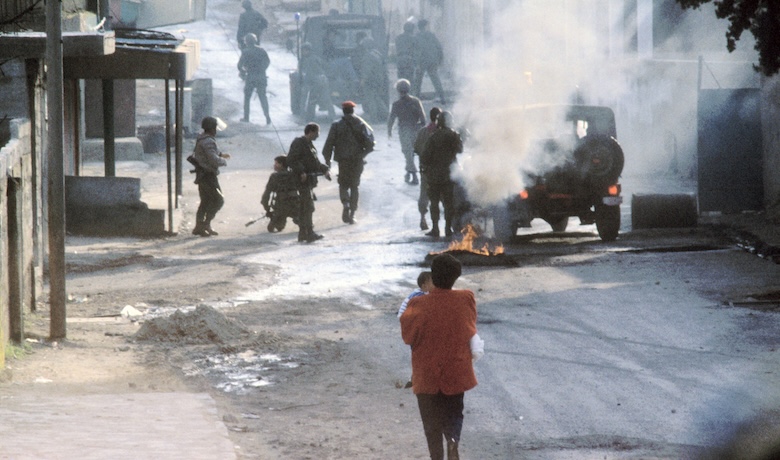
Photo credit: Efi Sharir, National Library of Israel
RELATED POSTS
by Rosa-Lena Lauterbach, Liisi Adamson, Sean Watts
September 29, 2026
–
Individualization in Civilian Internment Decisions
by Christina Colclough, Robert Lawless
September 29, 2026
–
Article 23 and Humanitarian Relief: What’s Right, What’s Left Unclear
September 30, 2026
–
by Hitoshi Nasu
October 7, 2026
–
The Prohibition of Deportation and Forcible Transfer
October 9, 2026
–
Navigating the Complexities of Common Article 3
by Geoffrey Corn, Benzion Aron
October 14, 2026
–
Reprisals in NIACs: What Is the Commentary’s Take?
October 16, 2026
–
October 21, 2026
–
Allegiance and Protected Persons in Proxy Warfare
by Eugénie Duss
October 23, 2026
–
Brain Computer Interface-Assisted Interrogations and Articles 27, 31, & 32
October 27, 2026
–
Two Answers and Two Open Questions on Taxing Humanitarian Relief
October 28, 2026
–
Article 13: The Personal Field of Application of Part II
by Sean Watts
October 30, 2026
–
by Eric Jensen
November 4, 2026
