

Topics

London Calling: The Customary Law of Naval Blockade and Contemporary Practice
Naval blockade has long occupied a distinctive place within the law of naval warfare. Until very recently some commentators regarded it as a relic of an earlier era, however, the employment of naval blockades in recent conflicts has confirmed that States continue to...
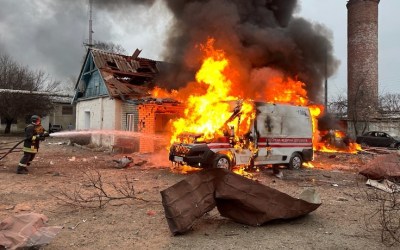
Mind the Gap: The Distance Between WHO Data and International Legal Standards
International lawyers, UN bodies, and human rights organizations increasingly cite one source when they discuss violence against health care in armed conflict: the World Health Organization's Surveillance System on Attacks on Health Care (SSA). Since its launch in...
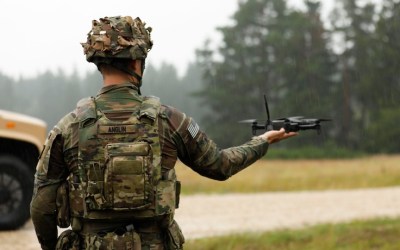
How the UN Bought Time for the World to Understand Autonomous Weapons
As the UN Group of Governmental Experts (GGE) concludes its decade-long mandate on lethal autonomous weapon systems (LAWS), its final report does little more than reiterate existing International Humanitarian Law (IHL). However, its value should not be judged as a...
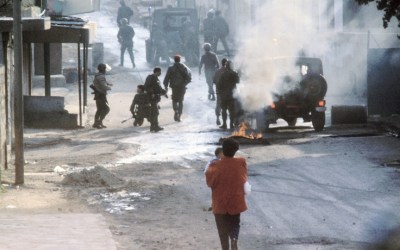
GC IV Commentary Series – Article 47 of the Fourth Geneva Convention of 1949: A Possible Blind Spot
Editors’ note: The following series considers ICRC’s 2025 updated Commentary on the Fourth Geneva Convention. Rosa-Lena Lauterbach, Liisi Adamson, and Sean Watts’s introduction to the series is available here. Although the International Committee of the Red Cross...
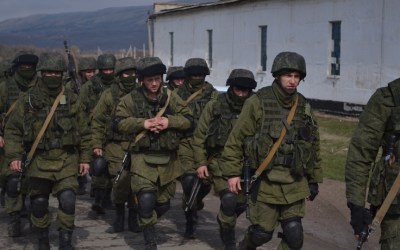
GC IV Commentary Series – Common Article 2(2) and (3)
Editors’ note: The following series considers ICRC’s 2025 updated Commentary on the Fourth Geneva Convention. Rosa-Lena Lauterbach, Liisi Adamson, and Sean Watts’s introduction to the series is available here. Most discussion concerning Article 2 common (CA 2) to the...

The Law on Brain Technologies in Warfare Series – HUMINT, Detainees, and “Brain Fingerprinting”
Editors’ note: This post is an entry in our series on Air Commodore (ret.) William H. Boothby’s book, The Law on Brain Technologies in Warfare published by Elgar International. As I outlined in a 2024 post, intelligence gathering has taken on an increasingly important...
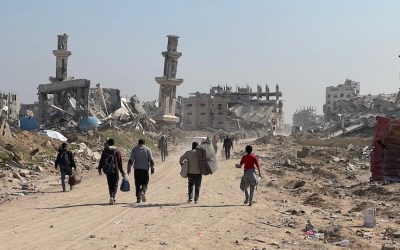
The ICJ and Factual Controversy in Advisory Proceedings: Deference in Factual Determinations?
The advisory opinion of the International Court of Justice (ICJ) of 22 October 2025 concerning Obligations of Israel in relation to the Presence and Activities of the United Nations, Other International Organizations and Third States in and in relation to the Occupied...
GC IV Commentary Series – Article 13: The Personal Field of Application of Part II
Editors’ note: The author of this post served on the Reading Committee of the updated Commentary on the Fourth Geneva Convention project. He provided feedback on early versions of the Commentary and co-authored, with a project team member, the Commentary’s sections on...
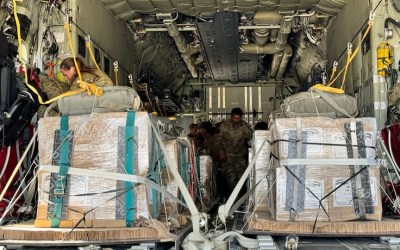
GC IV Commentary Series – Two Answers and Two Open Questions on Taxing Humanitarian Relief
Editors’ note: The following series considers ICRC’s 2025 updated Commentary on the Fourth Geneva Convention. Rosa-Lena Lauterbach, Liisi Adamson, and Sean Watts’s introduction to the series is available here. In its framework governing occupation, international...

(Past) Debates on the Legal Nature of Belligerent Occupation
The many theories on belligerent occupation that were raging at the beginning of the 20th century are little known, especially in the English-speaking world. This post will shed light on competing constructions of that time-honored notion, highlighting the breadth of...

GC IV Commentary Series – Brain Computer Interface-Assisted Interrogations and Articles 27, 31, & 32
Editors’ note: The following series considers ICRC’s 2025 updated Commentary on the Fourth Geneva Convention. Rosa-Lena Lauterbach, Liisi Adamson, and Sean Watts’s introduction to the series is available here. Any discussion of the treatment of new technology in the...

Transit States and Malicious Cyber Operations: No Due Diligence Obligation
The Tallinn Manual 2.0 advances the view that a transit State has a due diligence obligation to take feasible measures to terminate malicious cyber operations that may affect the rights of other States that it knows are transiting its territory or infrastructure under...
GC IV Commentary Series – Allegiance and Protected Persons in Proxy Warfare
Editors’ note: The following series considers ICRC’s 2025 updated Commentary on the Fourth Geneva Convention. Rosa-Lena Lauterbach, Liisi Adamson, and Sean Watts’s introduction to the series is available here. As outlined in Dr. Anaïs Maroonian’s post, principles hold...
GC IV Commentary Series – The Role of Principles in IHL
Editors’ note: The following series considers ICRC’s 2025 updated Commentary on the Fourth Geneva Convention. Rosa-Lena Lauterbach, Liisi Adamson, and Sean Watts’s introduction to the series is available here. Principles occupy a distinctive place in international...
PSYOP Defection Messages, Amnesty, and the Law of Armed Conflict
Calls to defect can save lives. When they promise amnesty, legal review must extend from the words broadcast to the authority behind them and the institutions expected to perform them. This post explores recent practice with calls for enemy defection, particularly as...
Hollow Control: Cyber Compromise and Human Judgment in Lethal Autonomous Weapons – Part II
The danger that cyber compromises pose to lethal autonomous weapons (LAWS) is that operators can make the right decision based on false information. Humans may remain in command while the information that makes that command meaningful has been corrupted. Our first...
GC IV Commentary Series – Reprisals in NIACs: What Is the Commentary’s Take?
Editors’ note: The following series considers ICRC’s 2025 updated Commentary on the Fourth Geneva Convention. Rosa-Lena Lauterbach, Liisi Adamson, and Sean Watts’s introduction to the series is available here. In its last section addressing Common Article 3, the 2025...

Military Microreactors and the Law of Targeting
A future military base may not only rely on diesel generators, vulnerable grids, and exposed fuel convoys for energy. It may instead be powered by a small nuclear reactor integrated into AI-enabled command nodes, electronic warfare systems, air-defense radars,...
GC IV Commentary Series – Navigating the Complexities of Common Article 3
Editors’ note: The following series considers ICRC’s 2025 updated Commentary on the Fourth Geneva Convention. Rosa-Lena Lauterbach, Liisi Adamson, and Sean Watts’s introduction to the series is available here. The delegates who drafted the 1949 Geneva Conventions...
Hollow Control: Cyber Compromise and Human Judgment in Lethal Autonomous Weapons – Part I
Observing that modern warfare is ever more reliant on networks, data, sensors, and software, all of which are vulnerable to attack, has the novelty factor of a field manual explaining that the enemy gets a vote. The more interesting and indeed pressing discussion...

GC IV Commentary Series – The Prohibition of Deportation and Forcible Transfer
Editors’ note: The following series considers ICRC’s 2025 updated Commentary on the Fourth Geneva Convention. Rosa-Lena Lauterbach, Liisi Adamson, and Sean Watts’s introduction to the series is available here. When Russian forces reached a town in Ukraine’s...
GC IV Commentary Series – On Interpretive Methodology
Editors’ note: The following series considers ICRC’s 2025 updated Commentary on the Fourth Geneva Convention. Rosa-Lena Lauterbach, Liisi Adamson, and Sean Watts’s introduction to the series is available here. In its recently updated commentary of Geneva Convention...

Asia-Pacific Journal Series – Dignitary Design: Embedding Human Dignity into Military AI
Editors’ note: This post appears as part of a series highlighting articles in a recent volume of the Asia-Pacific Journal of International Law, on which presentations were made at a workshop hosted by National University of Singapore’s Centre for International Law....

Asia-Pacific Journal Series – Can We Design Military AI to Follow IHL by Default?
Editors’ note: This post appears as part of a series highlighting articles in a recent volume of the Asia-Pacific Journal of International Law, on which presentations were made at a workshop hosted by National University of Singapore’s Centre for International Law....
Asia-Pacific Journal Series – The Martens Clause: International Law’s Favourite Rule That Nobody Uses
Editors’ note: This post appears as part of a series highlighting articles in a recent volume of the Asia-Pacific Journal of International Law, on which presentations were made at a workshop hosted by National University of Singapore’s Centre for International Law....
Asia-Pacific Journal Series – The De Jure Necessity and De Facto Improbability of Establishing a New Military AI Treaty
Editors’ note: This post appears as part of a series highlighting articles in a recent volume of the Asia-Pacific Journal of International Law, on which presentations were made at a workshop hosted by National University of Singapore’s Centre for International Law....
Lieber Studies Non-State Actor Attribution Volume Series – Artificial Intelligence and Attribution of Non-State Actors’ Conduct to States
Editors’ note: This post appears as an entry in a series dedicated to Dr Jennifer Maddocks’ monograph, Attribution of Non-State Actor Conduct during Armed Conflict, appearing in the Lieber Studies book series with Oxford University Press. We are pleased to contribute...
Asia-Pacific Journal Series – Introduction: Military AI Has Left the Laboratory
Editors’ note: This post appears as part of a series highlighting articles in a recent volume of the Asia-Pacific Journal of International Law, on which presentations were made at a workshop hosted by National University of Singapore’s Centre for International Law....

GC IV Commentary Series – Article 23 and Humanitarian Relief: What’s Right, What’s Left Unclear
Editors’ note: The following series considers ICRC’s 2025 updated Commentary on the Fourth Geneva Convention. Rosa-Lena Lauterbach, Liisi Adamson, and Sean Watts’s introduction to the series is available here. Article 23 of the Fourth Geneva Convention of 1949 (GC IV)...
GC IV Commentary Series – Individualization in Civilian Internment Decisions
Editors’ note: The following series considers ICRC’s 2025 updated Commentary on the Fourth Geneva Convention. Rosa-Lena Lauterbach, Liisi Adamson, and Sean Watts’s introduction to the series is available here. The Fourth Geneva Convention of 1949 regulates the...
GC IV Commentary Series – Introduction
Editors’ note: Sean Watts, co-author of this post, served on the Reading Committee that advised production of the ICRC’s Commentary on the Fourth Geneva Convention and co-authored two entries in it. Recent decades have produced a deluge of private and public-sector...
Lieber Studies Non-State Actor Attribution Volume Series – The Customary Law Status and Relevance of the Attribution Rule in Article 11 ARSIWA
Editors’ note: This post appears as an entry in a series dedicated to Dr Jennifer Maddocks’ monograph, Attribution of Non-State Actor Conduct during Armed Conflict, appearing in the Lieber Studies book series with Oxford University Press. In her recent book, Jenny...
The “Obligation” of States to Call for the Respect of IHL in Case of Violations
There are two bases in international law under which there is a discussion of an obligation of States to intervene and to call for the respect of international humanitarian law (IHL) rules in face of their violation: under particular international law, in the context...
Lieber Studies Non-State Actor Attribution Volume Series – Defining an “Insurrectional Movement”
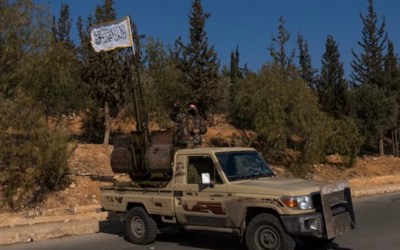
Editors’ note: This post appears as an entry in a series dedicated to Dr Jennifer Maddocks’ monograph, Attribution of Non-State Actor Conduct during Armed Conflict, appearing in the Lieber Studies book series with Oxford University Press. This post focuses on one...
Ukraine Symposium – International Law in the Crucible of Conflict, Volume 2
When we began our Articles of War series on the Ukraine-Russia war over four and a half years ago, we hoped to provide readers timely and fine-grained analysis of the challenges the conflict presented to the international security system and the legal regimes that...

Lieber Studies Non-State Actor Attribution Volume Series – Blowing the Dust Off Article 9 of ARSIWA: Some Clarity and Some Questions
Editors’ note: This post appears as an entry in a series dedicated to Dr Jennifer Maddocks’ monograph, Attribution of Non-State Actor Conduct during Armed Conflict, appearing in the Lieber Studies book series with Oxford University Press. Article 9 is a fascinating...
Lieber Studies Non-State Actor Attribution Volume Series – Shadow Warfare, State Attribution and Substantial Involvement
Editors’ note: This post appears as an entry in a series dedicated to Dr Jennifer Maddocks’ monograph, Attribution of Non-State Actor Conduct during Armed Conflict, appearing in the Lieber Studies book series with Oxford University Press. When is a State “the origin...

Lieber Studies Attribution of Non-State Actor Conduct Volume – Attribution of Non-State Actor Conduct During Armed Conflict
Editors' note: This post appears as an entry in a series dedicated to Dr Jennifer Maddocks' monograph, Attribution of Non-State Actor Conduct during Armed Conflict, appearing in the Lieber Studies book series with Oxford University Press. Dr Maddocks will participate...
Lieber Studies Attribution of Non-State Actor Conduct Volume – Series Introduction
With this series we are proud to showcase the work of our former colleague Dr. Jennifer Maddocks. While an Assistant Professor with the United States Military Academy’s Department of Law and Philosophy, she completed work on her monograph, Attribution of Non-State...
Maritime Blockade and its Starvation Effect: A Key Material Element in the Crime of Genocide?
In modern terms, a maritime blockade can be defined as “a belligerent operation intended to prevent vessel traffic from all States from entering or leaving specified coastal areas that are under the sovereignty, occupation, or control of an enemy. Such areas may...
State-Criminal Enterprise
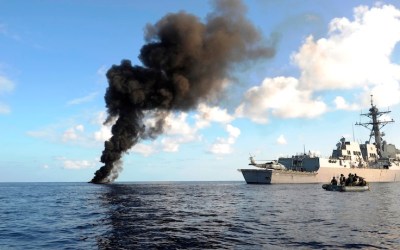
Criminal enterprises, once primarily associated with localized crime, are increasingly becoming a destabilizing force beyond national borders. A 2006 report from the Global Initiative Against Transnational Organized Crime details how organized criminal groups have...
Federated Front: AI-Assisted Targeting, the Rendulic Rule, and Multi-Domain Operations
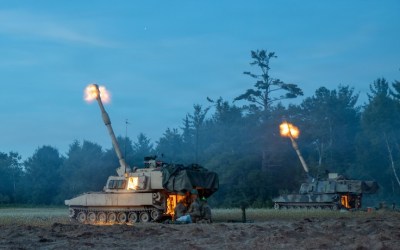
Consider the following scenario in the not-so-distant future: the Suwałki Gap, Autumn, 203X. In a desperate test of the North Atlantic Treaty’s Article V, mechanized forces of the Russian 11th Army Corps guarded by pervasive electronic warfare (EW) measures probe the...

Rethinking Proportionality in the Cloud Age: Reverberating Effects of Attacks on Data Centers
Few issues have attracted more attention in contemporary targeting law than reverberating effects from attacks. Much discussion has focused on attacks against traditional critical infrastructure—particularly on electrical power systems—where civilian harm may extend...
Compliance by Design V: LOAC in the Israeli Defense Industry
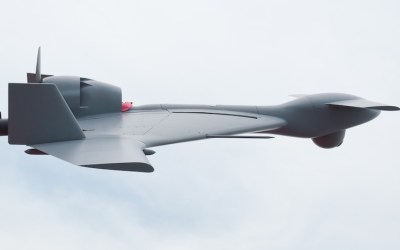
Editors’ note: This is the tenth post in a series dedicated to Lethal Autonomous Weapons Systems (LAWS) and the questions of human oversight and legal accountability under international humanitarian law. Previous posts have focused on LAWS, China, Russia, the United...
How Should Military AI Be Evaluated Under IHL?
Artificial intelligence (AI) is becoming an integral part of military operations. AI-enabled decision-support systems (AI-DSS) support intelligence analysis, target verification, operational planning, and the execution of military operations by collecting,...
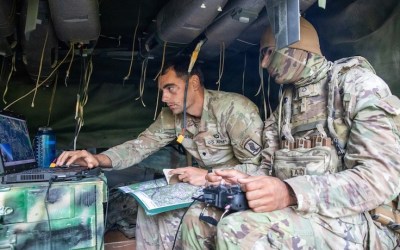
CyCon 2026 Series – CyCon Comes of (AI) Age
Editors’ note: This post introduces a series derived from panels and discussions that took place in 2026 at the 18th annual International Conference on Cyber Conflict (CyCon) event hosted by the NATO Cooperative Cyber Defence Centre of Excellence in Tallinn, Estonia....

CyCon 2026 Series – Cyber Operations in the Multidomain Battlespace: A Legal View from the Ministry of Defence of Ukraine
Editors’ note: This post introduces a series derived from panels and discussions that took place in 2026 at the 18th annual International Conference on Cyber Conflict (CyCon) event hosted by the NATO Cooperative Cyber Defence Centre of Excellence in Tallinn, Estonia....
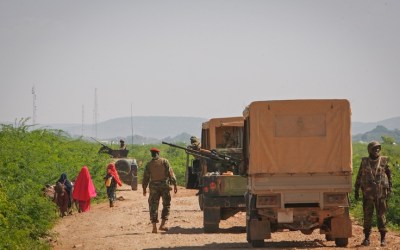
Identifying NIAC Series – Conclusion
Editors’ note: This post appears as a conclusion for the series examining Dr Nathan Derejko’s book, Identifying Non-International Armed Conflict published by Cambridge University Press. The series features alternating posts with our friends at Armed Groups and...
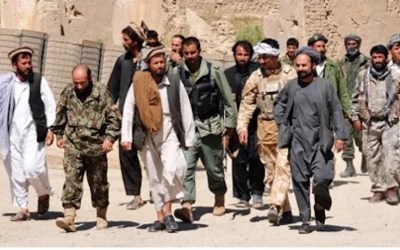
Identifying NIAC Series – When NIACs End: Support for Derejko’s Functional Approach
The following post by Martha Bradley focuses on the end of non-international armed conflicts (NIACs). The post was published on Armed Groups and International Law as part of the joint Articles of War and AGIL Identifying NIAC Series. RELATED POSTS Introduction:...
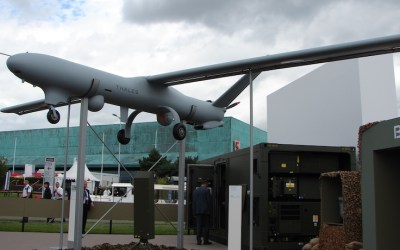
CyCon 2026 Series – Governing Responsible Military AI Through Defense Procurement
Editors’ note: This post introduces a series derived from panels and discussions that took place in 2026 at the 18th annual International Conference on Cyber Conflict (CyCon) event hosted by the NATO Cooperative Cyber Defence Centre of Excellence in Tallinn, Estonia....
CyCon 2026 Series – New Technologies, Armed Conflict, and International Humanitarian Law
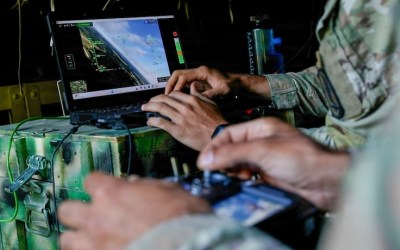
Editors’ note: This post introduces a series derived from panels and discussions that took place in 2026 at the 18th annual International Conference on Cyber Conflict (CyCon) event hosted by the NATO Cooperative Cyber Defence Centre of Excellence in Tallinn, Estonia....

Identifying NIAC Series – The Geography of War and the Nature of IHL
Editors’ note: This post appears as an entry in a series examining Dr Nathan Derejko’s book, Identifying Non-International Armed Conflict published by Cambridge University Press. The series features alternating posts with our friends at Armed Groups and International...
Identifying NIAC Series – The IHL Dramatis Personae: Black & White or Shades of Grey?
The following post by Katharine Fortin focuses on the personal scope of non-international armed conflicts (NIACs). The post was published on Armed Groups and International Law as part of the joint Articles of War and AGIL Identifying NIAC Series.RELATED POSTS...

From War Booty to War Learning: The Legal Status of Captured Military Artificial Intelligence
The law of armed conflict has long recognised that military victory carries with it certain legal consequences beyond the battlefield. Among them is the ability to capture and exploit enemy military property. Whether described as “war booty” or, as some modern...

Wildberries and the Unit of Analysis in Targeting Law
Since the middle of July 2026, Ukrainian long-range drones have struck more than twenty warehouses belonging to Wildberries, Russia’s largest online retailer. By August 5, Deutsche Welle estimated the company’s losses at between 1.2 and 1.5 million square meters of...
Identifying NIAC Series – Classifying Battlefield Actors in NIAC: Another View on an Old Conundrum
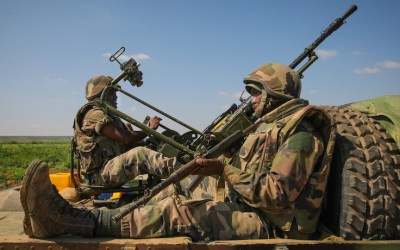
Editors’ note: This post appears as an entry in a series examining Dr Nathan Derejko’s book, Identifying Non-International Armed Conflict published by Cambridge University Press. The series features alternating posts with our friends at Armed Groups and International...
Target Selection by Machines: The Duty to Verify and the GGE Rolling Text
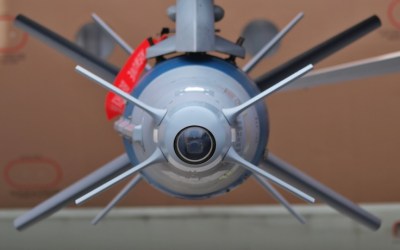
Editors’ note: This post is based on the author’s article “Target Selection by Autonomous Weapons Systems: What Does the Duty of Target Verification Require?,” published as an Exeter Centre for International Law Working Paper. On August 31, the Group of Governmental...

Identifying NIAC Series – Aggregating Criminal Violence: Challenges to NIAC-Classification
Editors’ note: This post appears as an entry in a series examining Dr Nathan Derejko’s book, Identifying Non-International Armed Conflict published by Cambridge University Press. The series features alternating posts with our friends at Armed Groups and International...
Identifying NIAC Series – The Concept of Non-International Armed Conflict – Towards a singular definition of NIACs?
The following post by Gloria Gaggioli focuses on the question of a single definition of NIACs (as opposed to the separation between CA3 NIACs and APII NIACs). The post was published on Armed Groups and International Law as part of the joint Articles of War and AGIL...

Identifying NIAC Series – Introduction: From Armed Violence to Armed Conflict
Having spent the better part of a decade researching, writing, thinking, and teaching non-international armed conflict (NIAC), I am delighted to share the culmination of that work: my recent Cambridge University Press monograph, Identifying Non-International Armed...
Using (and Abusing) Polling: The Martens Clause and Autonomous Weapons
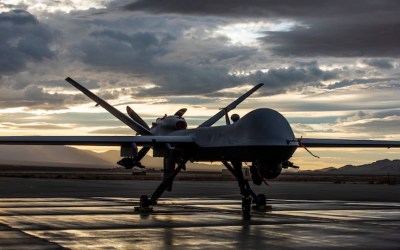
Editors’ note: This post is based on the author’s recent article, “Abhorrence and Autonomy: On the Place of Public Attitudes in the Debate on Militarised Artificial Intelligence” published in Volume 39 of Philosophy & Technology. Since debates around Autonomous...

Killings of Prisoners of War and Refusal of Quarter – Present and Past
Modern international humanitarian law (IHL) protects prisoners against attack or mistreatment from the moment they surrender or do something akin to surrender. Relevant provisions include Articles 40 and 41 of Additional Protocol I of 1977 (AP I). Regarding prescribed...

Medical Neutrality as a Contested Legal Concept in the 1899-1902 South African War
Editors’ note: This post is based on the author's recently published article "Neutrality as a Contested Concept in International Humanitarian Law: Red Cross Men in the South African War, 1899–1902" in volume 14 of Humanity: An International Journal of Human Rights,...

Beyond Nuclear: Does Russia’s Reported Anti-Starlink Weapon Breach the Outer Space Treaty?
In Late December 2025, intelligence services reported suspicion that Russia is developing a new anti-satellite weapon to target mass-constellations, such as SpaceX. Unlike traditional anti-satellite weapons that destroy a single target, the reported ability would...
Air Warfare and International Humanitarian Law
In 1949, the U.S. Army’s International Law Branch Chief, Major William G. Downey, provided remarks (in his personal capacity) to the American Society of International Law. He asserted, The person who first drafts an acceptable code of rules for use in aerial warfare...

When the Defender Is the Attacker and Does It Matter?
I was delighted to learn that Dr Jonathan Kwik has received funding for what promises to be a most important research project. Jonathan is fast developing a well-earned reputation as a thought-leader in complex areas associated with emerging technologies; for the...
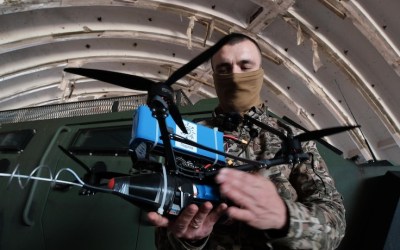
Beyond Human-in-the-Loop: Battlefield Maps for Drone Autonomy
The requirement that a human approve every lethal engagement, known as human-in-the-loop (HITL), is effectively dead, a casualty of the war in Ukraine. The requirement that commanders bear responsibility for the operations under their command, however, survives. The...

International Law, the Civil Law Tradition, and Sources of Law – Part II
Editors’ note: This is the second in a two-part post illustrating the impact of the civil law tradition on the formation of international law including the law of war, specifically the sources of international law. This entry will focus on general principles of law,...
The “Aggregated” Accumulation of Events Doctrine: Three Operational Hypotheticals
Editors’ note: This post is based on the author’s forthcoming contribution to “What if in 2031” in a fall/winter publication at the NATO Defence College (Rome). The post’s hyperlinks connect readers to actual events that are analogous to those presented in its...
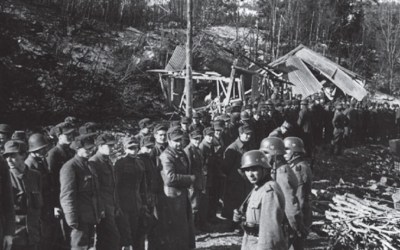
Surrender as a Weapon: Operational Paralysis and the Law of War
In the opening days of the Operation Desert Storm ground campaign, Iraqi Soldiers surrendered by the tens of thousands. They surrendered to armor, to infantry, and in one famous instance, to a remotely piloted drone hovering overhead. On one hand, the Iraqi prisoners...

Compliance by Design IV: LOAC in the European Defense Industry
Editors’ note: This is the ninth post in a series dedicated to Lethal Autonomous Weapons Systems (LAWS) and the questions of human oversight and legal accountability under international humanitarian law. Previous posts have focused on LAWS, China, Russia, the United...
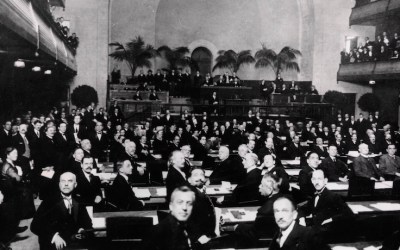
International Law, the Civil Law Tradition, and Sources of Law – Part I
Editors’ note: This is the first in a two-part post illustrating the impact of the civil law tradition on the formation of international law, specifically the sources of international law. This entry will focus on treaties and custom as sources of law, including in...
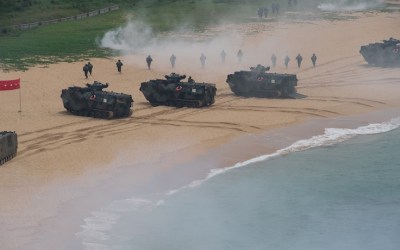
Lieber Studies Indo-Pacific Volume – Prisoners of War and a Taiwan Conflict
Editors’ note: This post is based on the author’s chapter in Armed Conflict and International Law in the Indo-Pacific Region (Douglas Guilfoyle & Jennifer Maddocks eds. 2026), the thirteenth volume of the Lieber Studies Series published with Oxford University...
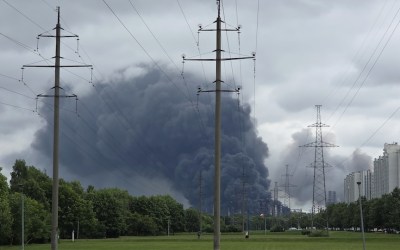
Where the Environment Sits: Proportionality and Strikes on Russian Oil Infrastructure
Through the spring and summer of 2026, Ukraine turned its long-range drone fleet into a systematic weapon against Russia’s refining sector. By late June, drones had struck eight of Russia’s ten largest refineries by processing capacity. Independent analysts placed...
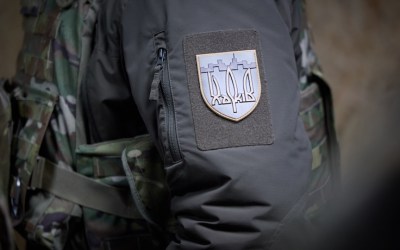
Self-Defence, the Principle of Due Diligence, and the Law of Neutrality in the Russia-Ukraine Conflict
Russia’s (unlawful) aggression against Ukraine, and the international armed conflict that it has triggered, raises many novel questions concerning the interpretation and application of international law. In this post, I want to focus on the law of self-defence as...

Lieber Studies Indo-Pacific Volume – A Tale of Tenacity, Tensions, and Ambiguity: Mutual Defense Treaties and Defense Groupings in the Indo-Pacific
Editors’ note: This post is based on the author’s chapter in Armed Conflict and International Law in the Indo-Pacific Region (Douglas Guilfoyle & Jennifer Maddocks eds. 2026), the thirteenth volume of the Lieber Studies Series published with Oxford University...

Whose Decision Was It? Drone Swarms and the Accountability Gap in Ukraine
On June 1, 2025, Ukraine launched roughly 100 small drones at Russian airbases spread across several time zones. The platforms had been smuggled close to their targets in wooden containers, then released to strike together. The operation, known as Operation Spider's...

Lieber Studies Indo-Pacific Volume – LOAC and Information Warfare in the Indo-Pacific
Editors’ note: This post is based on the author’s chapter in Armed Conflict and International Law in the Indo-Pacific Region (Douglas Guilfoyle & Jennifer Maddocks eds. 2026), the thirteenth volume of the Lieber Studies Series published with Oxford University...
Jus ad Bellum and Jus in Bello Targeting
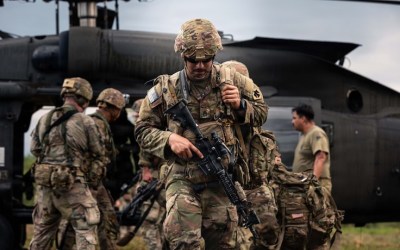
There is a growing tendency to devise a double targeting criterion for attacks: one for jus ad bellum (JAB); and one for jus in bello (JIB), and to require that the conditions for each are met so that an attack or other belligerent action with similar results can be...

Lieber Studies Indo-Pacific Volume – Interpretative Choice and Risk in Indo-Pacific Air Domain Challenges
Editors’ note: This post is based on the author’s chapter in Armed Conflict and International Law in the Indo-Pacific Region (Douglas Guilfoyle & Jennifer Maddocks eds. 2026), the thirteenth volume of the Lieber Studies Series published with Oxford University...

Lieber Studies Armed Conflict in the Indo-Pacific Region Volume Series – Introduction
In recent years, the Indo-Pacific has emerged as a principal arena of strategic competition. The region has witnessed intensified military modernization and rivalry among major powers, often involving hybrid tactics, maritime grey zone operations, and influence...

Dual-Purpose Objects
Editors’ note: This post is based on the authors’ recently published article “On the Purpose Limb of the Military Objective Test under the Law of Targeting” published in volume 64 of Military Law and Law of War Review. The concept of dual-use objects is misleading. It...

The ICJ Advisory Opinion on Climate Change and Cyber Operations – Part II: Jus in Bello
Part I of this two-post series analyzed how the International Court of Justice’s (ICJ) Climate Change advisory opinion might reshape State obligations in peacetime and the period leading up to conflict, particularly through an expanded due diligence framework that...

War Booty in the Modern Law of Armed Conflict
There is an often unnoticed lexical (and, by extension, substantive) controversy over the survival of war booty under the modern law of armed conflict. Most authors concede that this long-standing institution of the law of war has survived, albeit being severely...

Ukraine’s Attacks on Oil Infrastructure and the “War-Sustaining” Debate
On 16 June, Ukraine launched a drone strike on Russia’s Gazprom Neft Moscow Refinery, an oil processing facility that sources a third of the fuel supply for the Russian capital and its surrounding region. Two days later, Ukraine struck the refinery again with one of...

The ICJ Advisory Opinion on Climate Change and Cyber Operations – Part I: General International Law Considerations
In July 2025, the International Court of Justice (ICJ) issued its much-anticipated Climate Change advisory opinion. The opinion is worth reviewing for many reasons and raises a host of legal questions that have been addressed in various other fora. As an advisory...

From Nuremberg to Lafarge: Corporate War Crimes by Another Name?
The prosecution of the global corporation Lafarge in the United States and, more recently, in France may signal a major shift in wartime corporate accountability. Rather than relying on traditional war crimes tribunals, prosecutors are increasingly using domestic...

War Crimes in History
Editors’ note: This post is based on the author’s article-length work, “A History of the Law of War Crimes” appearing in International Review of the Red Cross. International law recognizes three categories of core crimes: genocide; crimes against humanity; and war...

Choice of Law in the Laws of War
In private international law, choice of law is a critical question concerned with identifying which legal system governs a dispute involving cross-border elements. A set of principles developed to address such questions does not resolve the dispute itself but rather...

Compliance by Design III: LOAC in China’s Autonomous Weapons Development
Editors’ note: This is the eight post in a series dedicated to Lethal Autonomous Weapons Systems (LAWS) and the questions of human oversight and legal accountability under international humanitarian law. Previous posts have focused on LAWS, China, Russia, the United...

Warnings in Contemporary Conflict: Protective Measure or Source of Illegality?
Since the beginning of March 2026, the Israeli Defense Forces (IDF) have issued a number of evacuation orders in southern Lebanon. These orders have directed the inhabitants of villages and towns in southern Lebanon to leave their homes and move north. Others...

Compliance by Design II: LOAC in U.S. Software Provided for Autonomous Combat Systems
Editors’ note: This is the seventh post in a series dedicated to Lethal Autonomous Weapons Systems (LAWS) and the questions of human oversight and legal accountability under international humanitarian law. Previous posts have focused on LAWS, China, Russia, the United...

Farewell to MAJ Evin Stovall
This week Articles of War and the Lieber Institute for Law and Warfare bid farewell to Major Evin Stovall. For two years, Evin served as Senior Editor at Articles of War where, behind the scenes for our readers but prominently for us, he led our administrative and...

The Notions of “Non-Belligerent” and “Other States not Parties to the Conflict” in the Geneva Conventions and Additional Protocol I
The Geneva Conventions (GCs) and Additional Protocol I (AP I) include obligations for neutral States. However, the wording is not orthodox. In GC III, the expression “non-belligerent” is found twice: once in Article 4(B)2; and again in Article 122. In AP I, reference...
Jamming Enemy Weapon Systems and the Law of Targeting
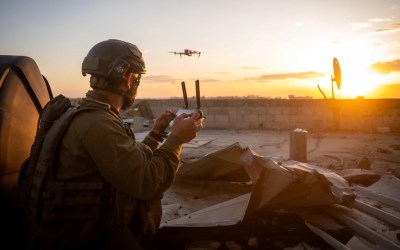
Throughout history, superior weaponry and tactics have always provided a decisive edge in warfare, driving continuous cycles of measures and countermeasures among adversaries. Today’s battlefields are no exception. In the Russo-Ukrainian war and the armed conflict...

Compliance by Design I: LOAC in U.S. Autonomous Combat Platforms
Editors’ note: This is the sixth post in a series dedicated to Lethal Autonomous Weapons Systems (LAWS) and the questions of human oversight and legal accountability under international humanitarian law. Previous posts have focused on LAWS, China, Russia, the United...

AI-on-AI Perfidy and the Law of Armed Conflict
Picture the following scenario: a forward-deployed artificial intelligence (AI) enabled surveillance platform detects a convoy moving along a contested highway at dusk. Its classification system flags the convoy as medical; the vehicles emit recognised humanitarian...

Humanitarian Assistance in International Law and the Distinction Between Preventive Assistance and Emergency Relief in Armed Conflict
Editors’ note: This post highlights work from the author’s forthcoming book, Humanitarian Assistance in International Law, published with Oxford University Press. Humanitarian assistance refers to essential goods and services provided in accordance with the core...

Prosecuting Wartime Sexual Torture: The Uneven Trajectory of International Jurisprudence
Sexual violence in armed conflict is rarely the product of a few undisciplined soldiers. In today’s major wars, it is frequently deployed as a deliberate method of domination, punishment, and control. Rape, genital mutilation and electrocution, forced nudity, and...

AI, the Box, and the Black
It was my honour and privilege to be invited to attend, and participate in a panel at, the U.S. Cyber Command Legal Conference, “Innovation to Impact” from 28 to 30 April 2026. The Conference addressed, inter alia, issues arising from the employment of artificial...
